


The best GLP-1 daily support shake recipes are the ones you can comfortably manage. Start with an 8-10-ounce serving; if that feels too large, begin with half and sip it slowly over 20-30 minutes. Prioritise a protein source, then adjust the ingredients and portion to suit your personal tolerance.
It can be frustrating when a shake that looks appealing feels too rich, filling or difficult to finish. You don’t need to force a particular blend: small changes to texture, ingredients and serving size can make it easier to find a comfortable option. This guide shows you how to build protein into a shake, make practical recipe choices, pace your sips and adapt each blend to what feels right for you whilst taking GLP-1 medication.
Key Takeaways
- Begin with a manageable shake portion and slow your sipping pace if it feels too filling.
- Build your blend around a protein source, then choose other ingredients to suit your preferences.
- Adjust texture and ingredients gradually to discover what feels comfortable for you.
- Explore My Wellness GLP-1 Daily Support Shake as a convenient option alongside homemade blends.
Portion size and sipping advice
Use these steps to make a smoothie portion easier to manage, while keeping ingredients and hydration adaptable.
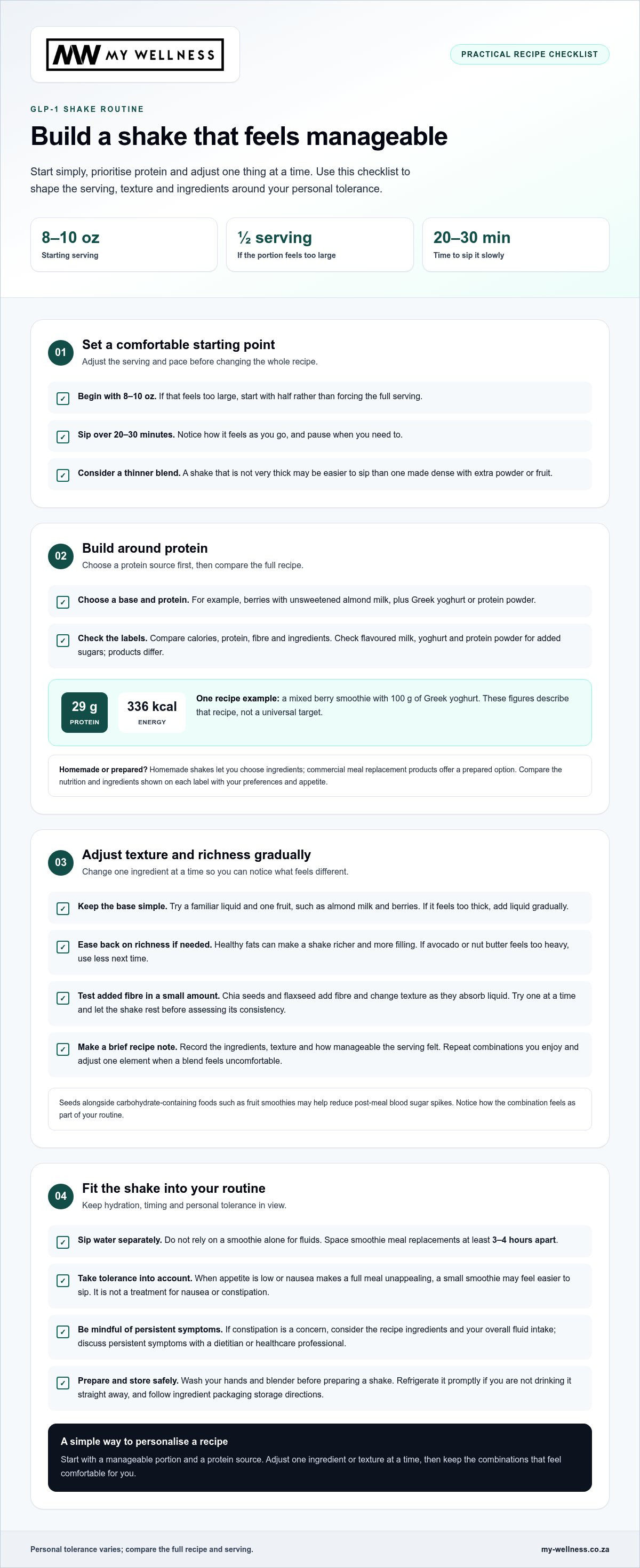
- Begin with a manageable serving. Start with an 8-10-ounce smoothie. If the portion feels too large, begin with half instead. This gives you a practical way to adjust serving size without changing every ingredient at once.
- Slow your pace. Sip your smoothie over 20-30 minutes rather than drinking it quickly. Notice how the portion feels as you go, and pause when you need to. A thinner blend may be easier to sip than one made very thick with extra powder or fruit.
- Compare recipes with products by their labels. Homemade shakes let you choose ingredients, such as Greek yoghurt or vanilla protein powder. Commercial meal replacement products offer a prepared option. Compare the protein, calories and ingredients shown for each, then choose what fits your preferences and appetite.
- Keep symptoms and tolerance in mind. When appetite is low or nausea makes a full meal unappealing, a small smoothie may feel easier to sip. It isn’t a treatment for nausea or constipation. If constipation is a concern, consider how the recipe’s ingredients and your overall fluid intake suit you, and discuss persistent symptoms with a dietitian or healthcare professional.
- Make hydration and timing part of the routine. Sip water separately rather than relying on a smoothie alone for fluids. Space smoothie meal replacements at least three to four hours apart. Avoid ingredients or supplements that you know don’t suit you, and don’t add a supplement solely because it is marketed for weight loss.
Prioritising protein while taking GLP-1 medication
Build each shake around a protein source, then add ingredients that suit your appetite. Compare recipes by their ingredients, texture and nutrition information, and tailor a blend to your routine.
-
Choose a low-sugar shake recipe
For GLP-1 daily support shake recipes, start with berries and unsweetened almond milk, then add a protein source. Check labels on flavoured milk, yoghurt and protein powder for added sugars. A lower-sugar blend can fit a weight-management diet, but the full recipe and portion shape its nutrition. Choose vanilla powder only after checking its ingredients.
-
Check calories, protein and fibre
Compare nutrition information for the complete serving, including calories, protein and fibre. A mixed berry smoothie with 100 g of Greek yoghurt provides approximately 29 g of protein and contains 336 kcal. Treat these figures as one recipe example, not a universal target. The berries contribute fibre, whilst yoghurt adds protein; review both alongside your appetite and overall diet.
-
Increase the protein content
These GLP-1 daily support shake recipes can be adapted with Greek yoghurt or a scoop of protein powder. Check the powder’s protein content and ingredients, as products differ. Make one change at a time, then assess the taste, thickness and ease of digestion. Adding several ingredients together makes it harder to tell which combination works for you.
For food safety, wash your hands and blender before preparing a shake. Refrigerate it promptly if you’re not drinking it straight away, and follow storage directions on ingredient packaging.
Explore protein shake options alongside homemade blends.
Adjusting recipes to personal tolerance
Change one ingredient at a time. A simple blend makes it easier to notice differences in texture, richness and how it feels to you.
A meal replacement shake may fit into your diet while taking semaglutide or tirzepatide. Suitability depends on its ingredients, nutritional content and your personal tolerance. It does not replace prescribed medication.
- Keep a simple base. Start with a familiar liquid and one fruit, such as almond milk and berries. If the smoothie feels too thick or packed, add liquid gradually. A thinner texture may be easier to sip than a dense blend.
- Adjust richness carefully. Healthy fats can make a shake richer and more filling. If avocado or nut butter feels too heavy, use less next time rather than changing several ingredients. This lets you identify which texture and combination suits your lifestyle.
- Test added fibre gradually. Chia seeds and flaxseed add fibre and change texture as they absorb liquid. Try one in a small amount first, then allow the smoothie to rest before deciding whether its consistency works for you.
- Pair ingredients thoughtfully. Seeds alongside carbohydrate-containing foods such as fruit smoothies may help reduce post-meal blood sugar spikes. Blend berries with chia seeds or flaxseed, and notice how the combination feels as part of your weight-management routine.
- Make a personal recipe note. Record the ingredients, texture and how manageable the serving felt. Repeat combinations you enjoy, and adjust one element when a blend feels uncomfortable. This simple method helps make nutritious shakes delicious and practical for everyday use.
Explore the GLP-1 Daily Support Shake as another shake option to consider alongside homemade recipes.
My Wellness: GLP-1 Daily Support Shake
My Wellness GLP-1 Daily Support Shake offers a ready-made option alongside homemade blends. Consider it when you want a shake without choosing and blending separate ingredients. Compare its nutrition information with your preferences, appetite and overall eating routine, just as you would when adapting a recipe.
For other moments in your routine, My Wellness also offers GLP-1 Hydration Support Strawberry Lemonade and GLP-1 Muscle Protect Creatine. These are distinct options, not substitutes for prescribed GLP-1 medication or tailored medical advice. Choose products according to the role you want them to play in your day, and keep your food and fluid choices aligned with what feels manageable.
Explore the GLP-1 support options or visit my-wellness.co.za.
Shape a shake routine that works for you
Let your next step be simple: choose a blend that fits your day, then pay attention to what feels manageable. The best GLP-1 daily support shake recipes are practical enough to adapt, not rigid formulas you have to follow exactly. Keep your preferences in view as your routine changes, and make one adjustment at a time so you can recognise what suits you.
For another option, My Wellness offers the GLP-1 Daily Support Shake, GLP-1 Hydration Support Strawberry Lemonade and GLP-1 Muscle Protect Creatine. Explore them as part of your wider wellness routine, alongside the homemade blends you enjoy.
Contact My Wellness for support as you consider your next step. Keep it personal, stay curious about what works for you, and build a routine that feels sustainable.
Frequently Asked Questions
What are easy daily shake recipes for people taking GLP-1 medication?
Blend one cup of mixed berries, half a frozen banana and a teaspoon of freshly grated ginger for a simple fruit smoothie. Add Greek yoghurt or protein powder for protein, then add enough liquid to reach your preferred consistency. Check the finished blend’s ingredients and nutrition information, as adding protein changes its nutritional content.
What protein, fibre and calorie targets should GLP-1 shakes provide?
There isn’t one protein, fibre or calorie target that suits everyone. Consider the nutrition information per serving alongside your overall diet, appetite and tolerance. A shake can contribute to your daily intake, but its label alone cannot show whether it meets your personal needs. Choose ingredients that complement your other meals.
Which high-protein ingredients work well in GLP-1 support shakes?
Greek yoghurt and protein powder are practical ways to add protein to a homemade shake. For a plant-based blend, choose a vegan protein powder and check its label for protein per serving and other ingredients. Blend it with berries or another fruit, then adjust the liquid to a texture you enjoy.
How should shake portions and timing fit around GLP-1 injections and meals?
Fit a shake into your usual meal or snack routine, and follow the instructions for your specific medication. Don’t change injection timing to accommodate a shake. If your appetite or tolerance varies around an injection, note which ingredients and meal times feel manageable, then use those observations to plan future meals.
How can shakes help manage nausea, constipation and low appetite on GLP-1 medication?
When appetite is low or nausea makes a full meal unappealing, a small smoothie may feel easier to sip, but it does not treat nausea or constipation. For constipation, consider the recipe ingredients and your overall fluid intake. Discuss persistent symptoms with a dietitian or healthcare professional.